Big Notch Project
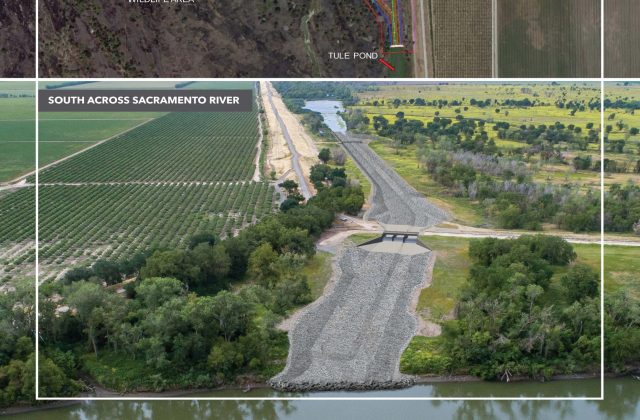
DWR and Reclamation have developed the Yolo Bypass Salmonid Habitat Restoration and Fish Passage (Big Notch) Project to improve fish passage and increase floodplain fisheries rearing habitat in Yolo Bypass and the lower Sacramento River basin.
Nigiri Project

The Nigiri Project is proposed to employ site-specific science to manage floodwaters on agricultural lands, providing ecologically rich habitat for self-sustaining populations of fish and wildlife in the Central Valley.
Floodplains Reimagined

This program will work in concert with a constellation of efforts underway in the Colusa, Butte, and Sutter Basins in the Mid-Sacramento River Valley region to improve the floodplain functional connectivity to support salmon, birds, and agriculture.
Lower Elkhorn Basin
Levee Setback Project

The Lower Elkhorn Basin Levee Setback (LEBLS) Project has been coordinated with the potential projects on the Conaway Ranch to assure its design does not diminish the potential for function of the projects on the Ranch.
Floodplain Forward Coalition

A collective effort to reactivate the floodplain in California’s Sacramento River Basin spearheaded by a diverse coalition of conservation organizations, farmers and other landowners, local governments, water suppliers and academic institutions.
Yolo Bypass Cache Slough Partnership

A group of local, state, and federal agencies, regional organizations, Native American Tribes, and other parties collaborating to implement projects capable of delivering multiple benefits across a shared YBCS landscape.
Yolo Habitat Conservation Plan

The Yolo Habitat Conservation Plan is a model conservation plan to provide Endangered Species Act permits and associated mitigation for infrastructure and development activities, identified for construction over the next 50 years in Yolo County.
Tule Canal Charrette

The Tule Canal Charrette brought 71 stakeholders with interests from flood control, to agriculture, to wildlife habitat, together over two days for a workshop. This remarkable synthesis of ideas was captured in a report released by Yolo County.


